
Novel Diagnostic Methods for Citrus Stubborn Disease
- 技術優勢
- Robust detection - secreted proteins are abundant and stable Rapid, cost-effective processing of large samples Monitors variable distribution of pathogens, and not just at the site of infection Proof-of-concept experiment available in a simple kit
- 技術應用
- Infected trees where pathogens are unevenly distributed Field survey for plants
- 詳細技術說明
- None
- *Abstract
-
Background:
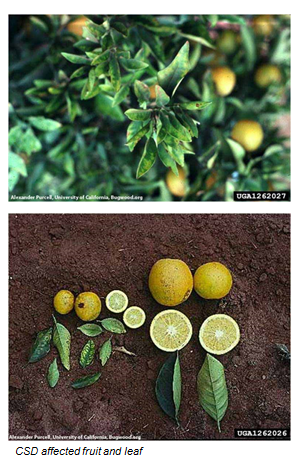
Citrus greening disease, also known as huanglongbing (HLB), is a stubborn bacterial disease caused by insect-transmission and phloem-limited bacterial pathogens. It has been a serious threat to the US citrus industry, decimating many citrus trees and costing the economy $11B in damages annually. The most commonly used method of nucleic-acid based pathogen detection has issues with low-titer (low concentration of antibodies to antigen) and cannot handle the erratic distribution of the pathogens.
Brief Description:
UCR researchers have developed a proof-of-concept for using secreted proteins of bacterial pathogens to detect bacterial diseases. These abundant and stable secreted proteins serve as robust detection markers for immunoassay-based diagnostics. Compared to current methods, this novel method is more high-throughput, economical, and able to monitor the pathogens dispersed throughout the plant transportation system.
- *Applications
-
- Infected trees where pathogens are unevenly distributed
- Field survey for plants
- *IP Issue Date
- Jul 12, 2016
- *Principal Investigation
-
Name: Wenbo Ma
Department:
Name: Georgios Vidalakis
Department:
- 申請號碼
- 9389230
- 其他
-
Images
Tech ID/UC Case
24526/2012-622-0
Related Cases
2012-622-0
- 國家/地區
- 美國