
Splice Modulating Oligonucleotides as a Breast Cancer Therapy
- 技术优势
- Targets untreatable breast cancers - may be used to treat triple negative breast cancer since it expresses the prolactin receptor and there are no targeted therapies for this cancer. 75-95% reduction in the number, size and density of metastatic colonies 95% decrease in the number of cancer stem cells High Target Specificity - targets only one splice form of a receptor, signaling molecule, or transcription factor Non-Toxic - after up to 18 months of treatment, no signs of SMO toxicity in tissue samples
- 详细技术说明
- None
- *Abstract
-
UCR researchers have designed novel splice modulating oligonucleotides (SMOs) that decrease expression of the long form of the prolactin receptor, thereby significantly inhibiting the metastatic spread of breast cancer to the lungs and liver. The SMO treatment also increased central death in the primary breast tumor. These SMOs may also target metastases produced by non-prolactin receptor-expressing primary tumors since all cancer stem cells examined so far are positive for the prolactin receptor. The researchers administered SMOs to two highly aggressive metastatic models of breast cancer, BT474 human xenografts, used for testing Herceptin, and a 4T1 syngeneic mouse model, which allows testing with an intact immune system.
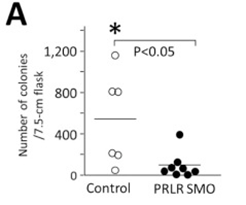
Fig. A shows a reduction in the number of metastatic colonies upon treatment with the UCR SMOs.
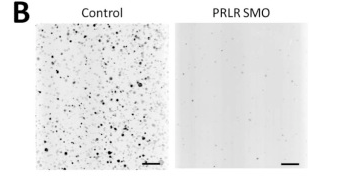
Fig. B titled "Control" is a stain of the metastatic colonies without SMO treatment. Fig. B titled "PRLR SMO" is a stain of the colonies after 40 days treatment with the UCR SMOs.
- *IP Issue Date
- Mar 6, 2018
- *Principal Investigation
-
Name: KuanHui (Ethan) Chen
Department:
Name: Mrinal Ghosh
Department:
Name: Ameae Walker
Department:
Name: Tomohiro Yonezawa
Department:
- 申请号码
- 9909128
- 其他
-
Applications
- May be used to treat prostate and ovarian cancers since prolactin receptors are expressed in these cancers.
- New class of therapeutic drugs that may be used to target other metastatic cancers and other indications triggered by alternative splicing
Background
Breast cancer is the most widely-diagnosed cancer in women. Over 266,000 women in the US will be diagnosed with breast cancer this year. Approximately 95% of breast cancers express prolactin receptors compared to 70% of breast cancers that express estrogen receptors. It is desirable to develop a therapy to target a common receptor expressed in ~95% of breast cancers.
Related Materials
Tech ID/UC Case
27134/2012-794-3
Related Cases
2012-794-3
- 国家/地区
- 美国